South Korea YouTube Science & Technology Videos

2019 · Upload-year list

100 records · Lifetime views, low to high · Page 6 of 10

All categoriesCoverage and methodology
#50Science & Technology

แอร์ยุคใหม่ Samsung WindFree Plus ดีต่อสุขภาพ

ยุคนี้แอร์เย็นอย่างเดียวมันเอาท์แล้ว Samsung WindFree Plus ให้มากกว่าความเย็น แต่ใส่ใจเรื่องสุขภาพ รายละเอียดเพิ่มเติม http://bit.ly/2CJmM8I #ขออากาศดีให้WeFin #SamsungWindFreePlus #Samsung #SamsungThailand #แอนทองประสม #แอร์ซัมซุง #เครื่องปรับอากาศซัมซุง #เครื่องใช้ไฟฟ้าซัมซุง #SamsungWindFreePlus #WindFree #แอร์เพื่อสุขภาพ #WiFi #ComfortCooling #ลมไม่ปะทะตัว #AirConforHealth #สั่งงานผ่านWiFi #ขออากาศดีให้WeFin #SamsungWindFreePlus #กรองฝุ่น #PM #AirConditioner #Inverter #แอร์Triangle #DustFilter #AirPurifier #VirusDoctor

Channel

Samsung Thailand

Lifetime views

5.7M

#49Science & Technology

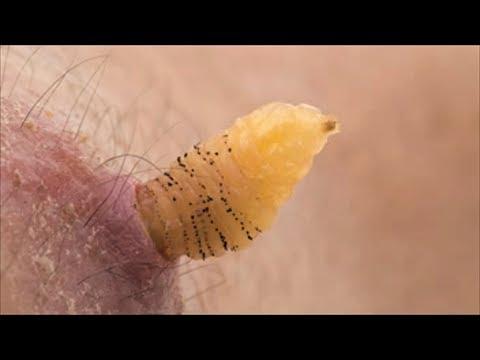
Researcher raises botflies under his skin I NOVA I PBS

"I know it sounds weird, but I felt an almost father-child relationship with this organism that was growing in my body," the entomologist says. Stream "NOVA Wonders: What's Living in You?" online or on the PBS app now at: pbs.org/wgbh/nova/wonders/#living-in-you Digital Producer Michael Rivera WHAT'S LIVING IN YOU? Written, Produced, and Directed by Peter Yost © WGBH Educational Foundation 2018

Channel

NOVA PBS Official

Lifetime views

5.7M

#48Science & Technology

Talking malnutrition with Aliko Dangote

Malnutrition is the greatest health inequity in the world. It’s responsible for nearly half of the world’s childhood deaths. I recently talked with my friend Aliko Dangote about how we had improve nutrition in his home country of Nigeria and around the world. Learn more at https://b-gat.es/2msgtC0

Channel

Bill Gates

Lifetime views

5.8M

#47Science & Technology

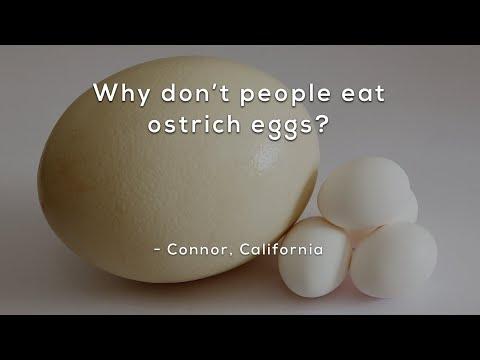
Why don't people eat ostrich eggs?

Are your kids wondering: “Why don't people eat ostrich eggs?” This question came from Connor, a student from the US. Like, share, and vote on next week's question here: https://mysterydoug.com/vote

Channel

Mystery Science

Lifetime views

6.1M

#46Science & Technology

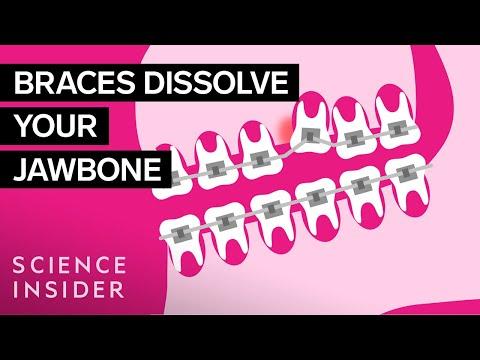
How Do Braces Actually Work?

Misaligned teeth can put you at risk for tooth decay, gum disease, and even tooth loss. Braces shift teeth by applying pressure, which constricts blood flow to the surrounding tissue that holds those teeth in place. That in turn causes special immune cells called osteoclasts to rush in and dissolve part of the jawbone, creating a space for the tooth to slide over and relieve the pressure. MORE HUMAN SCIENCE: What Activated Charcoal Actually Does To Your Body | The Human Body https://www.youtube.com/watch?v=DjTkwpEyiyo Why Some People's Hair Turns Gray https://www.youtube.com/watch?v=QJMTk8sBfFE Giving Birth In Your 20s VS Your 30s https://www.youtube.com/watch?v=gY5CLjmfhvo ------------------------------------------------------ #Braces #Teeth #ScienceInsider Science Insider tells you all you need to know about science: space, medicine, biotech, physiology, and more. Visit us at: https://www.businessinsider.com Science Insider on Facebook: https://www.facebook.com/BusinessInsiderScience/ Science Insider on Instagram: https://www.instagram.com/science_insider/ Business Insider on Twitter: https://twitter.com/businessinsider Tech Insider on Twitter: https://twitter.com/techinsider Business Insider/Tech Insider on Amazon Prime: http://read.bi/PrimeVideo How Do Braces Actually Work?

Channel

Insider Science

Lifetime views

6.2M

#45Science & Technology

How to Talk to Aliens

Are we alone in the universe? Even if we could contact aliens, what would we say? How would we say it? And, most importantly, should we even be trying to make contact at all? This episode takes me on a journey to compose and send my own personal message into outer space. Available with YouTube Premium - https://www.youtube.com/premium/originals. To see if Premium is available in your country, click here: https://goo.gl/A3HtfP

Channel

Vsauce

Lifetime views

6.3M

#44Science & Technology

🔬 Science Max - EARTHQUAKES - Home Experiments 🌎

Have you ever done a science experiment and wondered “What would this be like if it were HUGE?” Welcome to Science Max, the exciting new series that turbocharges all the science experiments you’ve done at home.

Channel

Science Max - Scholastic

Lifetime views

6.6M

#43Science & Technology

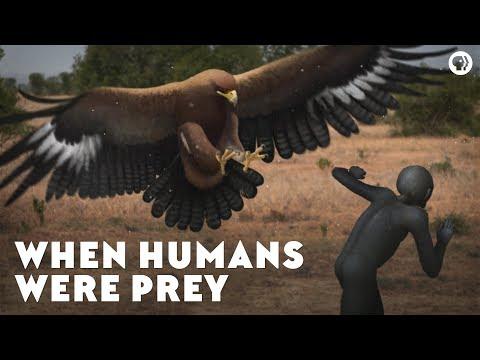
When Humans Were Prey

PBS Member Stations rely on viewers like you. To support your local station, go to http://to.pbs.org/DonateEons ↓ More info below ↓ Not too long ago, our early human ancestors were under constant threat of attack from predators. And it turns out that this difficult chapter in our history may be responsible for the adaptations that allowed us to become so successful. Thanks to Julio Lacerda and Studio 252mya for the illustrations of the Taung Child. You can find more of Julio's work here: https://252mya.com/gallery/julio-lacerda Produced for PBS Digital Studios. Super special thanks to the following Patreon patrons for helping make Eons possible: Katie Fichtner, Anthony Callaghan, Renzo Caimi Ordenes, John Vanek, Neil H. Gray, Marilyn Wolmart, Esmeralda Rupp-Spangle, Gregory Donovan, Ehit Dinesh Agarwal, الخليفي سلطان , Gabriel Cortez, Marcus Lejon, Robert Arévalo, Robert Hill, Kelby Reid, Todd Dittman, Betsy Radley, PS, Colin Sylvester, Philip Slingerland, Jose Garcia, Eric Vonk, Tony Wamsley, Henrik Peteri, Jonathan Wright, Jon Monteiro, James Bording, Brad Nicholls, Miles Chaston, Michael McClellan, Jeff Graham, Maria Humphrey, Nathan Paskett, Connor Jensen, Daisuke Goto, Hubert Rady, Yuntao Zhou, Gregory Kintz, Tyson Cleary, Chandler Bass, Maly Lor, Joao Ascensao, Tsee Lee, Sarah Fritts, Ruben Winter, Ron Harvey Jr, Jacob Gerke, Alex Yan If you'd like to support the channel, head over to http://patreon.com/eons and pledge for some cool rewards! Want to follow Eons elsewhere? Twitter https://twitter.com/eonsshow Instagram https://www.instagram.com/eonsshow/ References: http://humanorigins.si.edu/evidence/human-fossils/fossils/taung-child http://humanorigins.si.edu/evidence/human-fossils/species/paranthropus-robustus http://humanorigins.si.edu/evidence/human-fossils/fossils/oh-8 http://news.bbc.co.uk/2/hi/science/nature/4729050.stm http://time.com/5424347/remains-neanderthal-giant-bird-poland/ http://scienceinpoland.pap.pl/en/news/news%2C31287%2Cscientists-discover-oldest-human-remains-poland-they-are-over-100000-years-old.html Berger, L. R. (2006). Brief communication: Predatory bird damage to the Taung type-skull of Australopithecus africanus Dart 1925. American Journal of Physical Anthropology: The Official Publication of the American Association of Physical Anthropologists, 131(2), 166-168. Berger, L. R., & Clarke, R. J. (1995). Eagle involvement in accumulation of the Taung child fauna. Journal of Human Evolution, 29(3), 275-299. Berger, L. R., & McGraw, W. S. (2007). Further evidence for eagle predation of, and feeding damage on, the Taung child. South African Journal of Science, 103(11-12), 496-498. Blumenschine, R. J., Stanistreet, I. G., Njau, J. K., Bamford, M. K., Masao, F. T., Albert, R. M., ... & Fernández-Jalvo, Y. (2012). Environments and hominin activities across the FLK Peninsula during Zinjanthropus times (1.84 Ma), Olduvai Gorge, Tanzania. Journal of Human Evolution, 63(2), 364-383. Brain, C. K. (1970). New finds at the Swartkrans australopithecine site. Nature, 225(5238), 1112. Brain, C. K. (1983). The hunters or the hunted?: an introduction to African cave taphonomy. University of Chicago Press. Bunn, H. T. (1991). A taphonomic perspective on the archaeology of human origins. Annual Review of Anthropology, 20(1), 433-467. Dart, R. A. (1949). The predatory implemental technique of Australopithecus. American Journal of Physical Anthropology, 7(1), 1-38. Dart, R. A. (1953). The predatory transition from ape to man. Brill. Dart, R. A. (1958). The Minimal Bone-Breccia Content of Makapansgat and the Australopithecine Predatory Habit. American Anthropologist, 60(5), 923-931. Hart, D. (2018). Man the hunted: Primates, predators, and human evolution. Routledge. Hart, D., & Sussman, R. W. (2011). The influence of predation on primate and early human evolution: impetus for cooperation. In Origins of Altruism and Cooperation (pp. 19-40). Springer, New York, NY. Njau, J. K., & Blumenschine, R. J. (2006). A diagnosis of crocodile feeding traces on larger mammal bone, with fossil examples from the Plio-Pleistocene Olduvai Basin, Tanzania. Journal of Human Evolution, 50(2), 142-162. Njau, J. K., & Blumenschine, R. J. (2012). Crocodylian and mammalian carnivore feeding traces on hominid fossils from FLK 22 and FLK NN 3, Plio-Pleistocene, Olduvai Gorge, Tanzania. Journal of human evolution, 63(2), 408-417. Pickering, T. R., Schick, K. D., & Toth, N. P. (Eds.). (2007). Breathing life into fossils: taphonomic studies in honor of CK (Bob) Brain. Gosport, IN: Stone Age Institute Press. Tobias, P. V. (1990). When and by whom was the Taung skull discovered. Para conocer al hombre: homenaje a Santiago Genovése. Mexico City: Universidad Nacional Autonoma da Mexico, 207-213. Washburn, S. L. (1957). Australopithecines: the hunters or the hunted?. American Anthropologist, 59(4), 612-614. Zuberbühler, K., & Jenny, D. (2002). Leopard predation and primate evolution. Journal of Human Evolution, 43(6), 873-886.

Channel

PBS Eons

Lifetime views

6.9M

#42Science & Technology

Watch Bed Bugs Get Stopped in Their Tracks | Deep Look

At night, these parasites crawl onto your bed, bite you and suck your blood. Then they find a nearby hideout where they leave disgusting telltale signs. But these pests have an Achilles’ heel that stops them cold. SUBSCRIBE to Deep Look! http://goo.gl/8NwXqt Join our community on Patreon! https://www.patreon.com/deeplook DEEP LOOK is a ultra-HD (4K) short video series created by KQED San Francisco and presented by PBS Digital Studios. See the unseen at the very edge of our visible world. Explore big scientific mysteries by going incredibly small. Adult bed bugs are about the size and color of an apple seed. After biting, they hide in a nearby cranny, like the seam of the mattress. At the University of California, Irvine, biologist and engineer Catherine Loudon is working to create synthetic surfaces that could trap bed bugs. She was inspired by the tiny hooked hairs that grow from the leaves of some varieties of beans, such as kidney and green beans. In nature, these hairs, called trichomes, pierce through the feet of the aphids and leafhoppers that like to feed on the plants. Researchers have found that these pointy hairs are just as effective against bed bugs, even though the bloodsucking parasites don’t feed on leaves. Loudon’s goal is to mimic a bean leaf’s mechanism to create an inexpensive, portable bed bug trap. “You could imagine a strip that would act as a barrier that could be placed virtually anywhere: across the portal to a room, behind the headboard, on subway seats, an airplane,” Loudon said. “They have six legs, so that’s six opportunities to get trapped.” --- Where do bed bugs come from? Bed bugs don’t fly or jump or come in from the garden. They crawl very quickly and hide in travelers’ luggage. They also move around on secondhand furniture, or from apartment to apartment. --- How can I avoid bringing bed bugs home? “It would probably be a prudent thing to do a quick bed check if you’re sleeping in a strange bed,” said Potter. His recommendation goes for hotel rooms, as well as dorms and summer camp bunk beds. He suggests pulling back the sheet at the head of the bed and checking the seams on the top and bottom of the mattress and the box spring. ---+ For more tips, read the entire article on KQED Science: https://www.kqed.org/science/1944245/watch-bed-bugs-get-stopped-in-their-tracks ---+ More Great Deep Look Episodes: ‘Parasites are Dynamite’ Playlist: https://www.youtube.com/playlist?list=PLdKlciEDdCQACmrtvWX7hr7X7Zv8F4nEi ---+ 🏆Congratulations 🏆to the following fans for correctly identifying the creature's species name in our community tab challenge: Stay in Your Layne Brian Lee Brad Denney Elise Wade Raminta’s Photography https://www.youtube.com/channel/UC-3SbfTPJsL8fJAPKiVqBLg/community?lb=Ugz37Tnkfr8gOF7tRL54AaABCQ ---+ Thank you to our Top Patreon Supporters ($10+ per month)! Allen, Aurora Mitchell, Beckie, Ben Espey, Bill Cass, Bluapex, Breanna Tarnawsky, Carl, Chris B Emrick, Chris Murphy, Cindy McGill, Companion Cube, Cory, Daisuke Goto, Daisy Trevino , Daniel Voisine, Daniel Weinstein, David Deshpande, Dean Skoglund, Edwin Rivas, Elizabeth Ann Ditz, Eric Carter, Geidi Rodriguez, Gerardo Alfaro, Ivan Alexander, Jane Orbuch, JanetFromAnotherPlanet, Jason Buberel, Jeanine Womble, Jeanne Sommer, Jiayang Li, Joao Ascensao, johanna reis, Johnnyonnyful, Joshua Murallon Robertson, Justin Bull, Kallie Moore, Karen Reynolds, Katherine Schick, Kendall Rasmussen, Kenia Villegas, Kristell Esquivel, KW, Kyle Fisher, Laurel Przybylski, Levi Cai, Mark Joshua Bernardo, Michael Mieczkowski, Michele Wong, Nathan Padilla, Nathan Wright, Nicolette Ray, Pamela Parker, PM Daeley, Ricardo Martinez, riceeater, Richard Shalumov, Rick Wong, Robert Amling, Robert Warner, Samuel Bean, Sayantan Dasgupta, Sean Tucker, Shelley Pearson Cranshaw, Shirley Washburn, Sonia Tanlimco, SueEllen McCann, Supernovabetty, Tea Torvinen, TierZoo, Titania Juang, Two Box Fish, WhatzGames, Willy Nursalim, Yvan Mostaza ---+ Follow KQED Science and Deep Look: Patreon: https://www.patreon.com/deeplook Instagram: https://www.instagram.com/kqedscience/ Twitter: https://www.twitter.com/kqedscience KQED Science on kqed.org: http://www.kqed.org/science Facebook Watch: https://www.facebook.com/DeepLookPBS/ ---+ About KQED KQED, an NPR and PBS affiliate in San Francisco, CA, serves Northern California and beyond with a public-supported alternative to commercial TV, radio and web media. Funding for Deep Look is provided in part by PBS Digital Studios. Deep Look is a project of KQED Science, which is also supported by the National Science Foundation, the S. D. Bechtel, Jr. Foundation, the Dirk and Charlene Kabcenell Foundation, the Vadasz Family Foundation, the Fuhs Family Foundation, Campaign 21 and the members of KQED. #bedbug #bedbugtrap #bedbugbite

Channel

Deep Look

Lifetime views

7.2M

#41Science & Technology

Behind the Waymo Driver

When you ride with Waymo, it may look like no one is in the driver's seat, but behind the Waymo Driver lies all of our passion and hard work. About Waymo: Waymo is an autonomous driving technology company with a mission to make it safe and easy for people and things to move around. With the Waymo Driver, we can improve the world’s mobility while saving thousands of lives. Connect with Waymo: We're hiring: https://waymo.com/joinus/ Follow Waymo on Twitter: https://twitter.com/waymo Follow Waymo on Instagram: https://www.instagram.com/waymo Follow Waymo on LinkedIn: https://www.linkedin.com/company/waymo Like Waymo on Facebook: https://www.facebook.com/Waymo/

Channel

Waymo

Lifetime views

7.2M

Coverage and selection method

100 distinct videos are stored for this selection. Page 6 of 10; ten records per page, ordered from fewest to most recorded views with video ID as a stable tie-breaker.

This page includes upload-year records with lifetime views measured by the YouTube API. The recorded date describes when a total was measured. Historical rows, when present, use an archive year and lack observation dates.

Coverage is limited to stored South Korea records and may omit videos or dates. The order describes this dataset, not a complete YouTube chart.

The first record on this page has 5.7M recorded views, compared with 7.2M for the last. The median on this page is 6.3M views. Browse later pages for a broader sample of the archive.

Understand the archive. Build your next idea.

Start with a question, check the evidence and use the tools in context.