Canada YouTube Science & Technology Videos

2019 · Upload-year list

100 records · Lifetime views, low to high · Page 3 of 10

All categoriesCoverage and methodology
#80Science & Technology

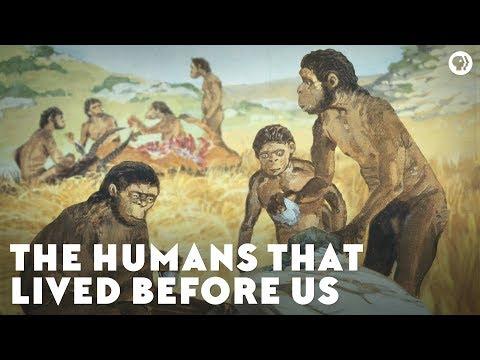
The Humans That Lived Before Us

PBS Member Stations rely on viewers like you. To support your local station, go to http://to.pbs.org/DonateEons ↓ More info below ↓ As more and more fossil ancestors have been found, our genus has become more and more inclusive, incorporating more members that look less like us, Homo sapiens. By getting to know these other hominins--the ones who came before us--we can start to answer some big questions about what it essentially means to be human. Thanks as always to Nobu Tamura for allowing us to use his wonderful paleoart: http://spinops.blogspot.com/ Thanks to Julio Lacerda and Studio 252mya for the hominin illustrations. You can find more of Julio's work here: https://252mya.com/gallery/julio-lacerda Produced for PBS Digital Studios. Super special thanks to the following Patreon patrons for helping make Eons possible: Katie Fichtner, Anthony Callaghan, Renzo Caimi Ordenes, John Vanek, Neil H. Gray, Marilyn Wolmart, Esmeralda Rupp-Spangle, Gregory Donovan, Ehit Dinesh Agarwal, الخليفي سلطان , Gabriel Cortez, Marcus Lejon, Robert Arévalo, Robert Hill, Kelby Reid, Todd Dittman, Betsy Radley, PS, Colin Sylvester, Philip Slingerland, Jose Garcia, Eric Vonk, Tony Wamsley, Henrik Peteri, Jonathan Wright, Jon Monteiro, James Bording, Brad Nicholls, Miles Chaston, Michael McClellan, Jeff Graham, Maria Humphrey, Nathan Paskett, Connor Jensen, Daisuke Goto, Hubert Rady, Yuntao Zhou, Gregory Kintz, Tyson Cleary, Chandler Bass, Maly Lor, Joao Ascensao, Tsee Lee, Sarah Fritts, Ruben Winter, Ron Harvey Jr, Jacob Gerke, Alex Yan If you'd like to support the channel, head over to http://patreon.com/eons and pledge for some cool rewards! Want to follow Eons elsewhere on the internet? Facebook - https://www.facebook.com/eonsshow Twitter - https://twitter.com/eonsshow Instagram - https://www.instagram.com/eonsshow/ References: http://humanorigins.si.edu/evidence/human-fossils/species/australopithecus-sediba http://humanorigins.si.edu/evidence/human-fossils/species/homo-rudolfensis http://humanorigins.si.edu/evidence/human-fossils/species/homo-erectus http://humanorigins.si.edu/evidence/human-fossils/species/homo-habilis http://humanorigins.si.edu/evidence/human-fossils/fossils/knm-er-1813 http://humanorigins.si.edu/evidence/human-fossils/fossils/knm-er-1470 http://humanorigins.si.edu/evidence/behavior/footprints/laetoli-footprint-trails http://humanorigins.si.edu/evidence/human-fossils/fossils/al-288-1 https://australianmuseum.net.au/learn/science/human-evolution/homo-ergaster/ https://www.earthmagazine.org/article/redefining-homo-does-our-family-tree-need-more-branches https://medium.com/@johnhawks/the-plot-to-kill-homo-habilis-94a33bee2adf Antón, S. C., Potts, R., & Aiello, L. C. (2014). Evolution of early Homo: an integrated biological perspective. Science, 345(6192), 1236828. Gibbons, A. (2015). Deep roots for the genus Homo. Haile-Selassie, Y., Latimer, B. M., Alene, M., Deino, A. L., Gibert, L., Melillo, S. M., ... & Lovejoy, C. O. (2010). An early Australopithecus afarensis postcranium from Woranso-Mille, Ethiopia. Proceedings of the National Academy of Sciences, 107(27), 12121-12126. Leakey, L. S., Tobias, P. V., & Napier, J. R. (1964). A new species of the genus Homo from Olduvai Gorge. Schwartz, J. H., & Tattersall, I. (2015). Defining the genus Homo. Science, 349(6251), 931-932. Susman, R. L. (1994). Fossil evidence for early hominid tool use. Science, 265(5178), 1570-1573. Villmoare, B., Kimbel, W. H., Seyoum, C., Campisano, C. J., DiMaggio, E. N., Rowan, J., ... & Reed, K. E. (2015). Early Homo at 2.8 Ma from Ledi-Geraru, Afar, Ethiopia. Science, 347(6228), 1352-1355. Wood, B. (1992). Origin and evolution of the genus Homo. Nature, 355(6363), 783. Wood, B. (1999). 'Homo rudolfensis' Alexeev, 1986-fact or phantom?. Journal of human evolution, 36(1), 115. Wood, B. (2014). Human evolution: Fifty years after Homo habilis. Nature News, 508(7494), 31. Wood, B., & Collard, M. (1999). The human genus. Science, 284(5411), 65-71.

Channel

PBS Eons

Lifetime views

4.1M
#79Science & Technology

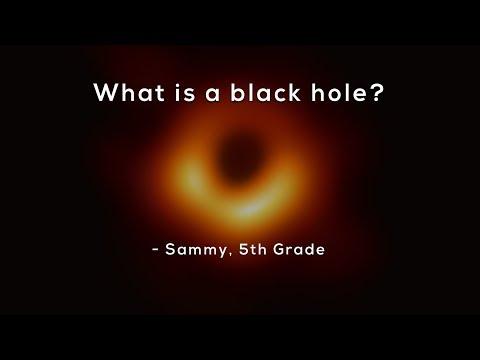
What is a black hole?

Are your kids wondering: “What is a black hole?” This question came from Sammy, a 5th Grader from the US. Like, share and vote on next week's question here: https://mysterydoug.com/vote

Channel

Mystery Science

Lifetime views

4.3M

#78Science & Technology

Google One

Google One is one membership to get more out of Google. Expanded storage, automatic phone backup, access to Google experts, and exclusive benefits -- all in one shareable plan. Subscribe to our Channel: https://www.youtube.com/google Tweet with us on Twitter: https://twitter.com/google Follow us on Instagram: https://www.instagram.com/google Join us on Facebook: https://www.facebook.com/Google

Channel

Google

Lifetime views

4.3M

#77Science & Technology

Science Max | Rube Goldberg | FUN SCIENCE

🚀NEW VIDEOS EVERY THURSDAY! 🚀 Have you ever done a science experiment and wondered “What would this be like if it were HUGE?” Welcome to Science Max, the exciting new series that turbocharges all the science experiments you’ve done at home.

Channel

Science Max - Scholastic

Lifetime views

4.3M

#76Science & Technology

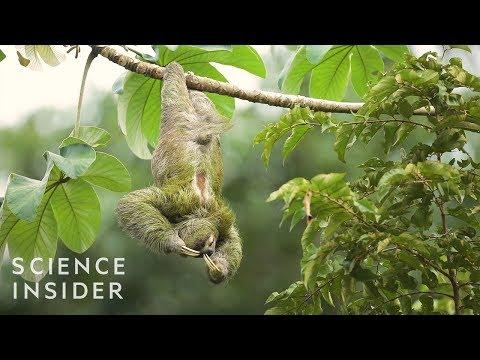
The Extreme Life Of A Sloth

Sloths are the slowest mammal on the planet. But as strange as they seem the sloth is perfectly adapted to their environment and is actually slow for a very important reason. In fact, sloths are far from boring and are a lot more extreme than it seems. With an ecosystem on their backs, which scientists believe may even be capable of curing cancer. They even risk their lives to poop and when they do, they make it count, pooping over 30% of their body weight. For more info, visit: https://slothconservation.com MORE EXTREME MOTHER NATURE: The Most Extreme Milk In The Animal Kingdom https://www.youtube.com/watch?v=CbBgcs9NYLE The Most Extreme Romances In The Animal Kingdom https://www.youtube.com/watch?v=rIeHF1IFdss The Most Extreme Births In The Animal Kingdom https://www.youtube.com/watch?v=Tk2Hy7UGRk0 ------------------------------------------------------ #Sloth #Animal #ScienceInsider Science Insider tells you all you need to know about science: space, medicine, biotech, physiology, and more. Visit us at: https://www.businessinsider.com Science Insider on Facebook: https://www.facebook.com/BusinessInsiderScience/ Science Insider on Instagram: https://www.instagram.com/science_insider/ Business Insider on Twitter: https://twitter.com/businessinsider Tech Insider on Twitter: https://twitter.com/techinsider Business Insider/Tech Insider on Amazon Prime: http://read.bi/PrimeVideo The Extreme Life Of A Sloth

Channel

Insider Science

Lifetime views

4.4M

#75Science & Technology

Former NASA Astronaut Explains How Food Is Different in Space | WIRED

What's different about food in space? Former NASA astronaut Mike Massimino breaks down all the differences between eating on Earth and eating in space. Is astronaut ice cream REALLY a thing? Who decides what food is brought to space? Can you eat burgers in space? Why do astronauts use tortillas instead of bread? Mike Massimino is a former NASA astronaut, senior advisor for space programs at the Intrepid Museum, and professor at Columbia University. Still haven’t subscribed to WIRED on YouTube? ►► http://wrd.cm/15fP7B7 Listen to the Get WIRED podcast ►► https://link.chtbl.com/wired-ytc-desc Want more WIRED? Get the magazine ►► https://subscribe.wired.com/subscribe/splits/wired/WIR_YouTube?source=EDT_WIR_YouTube_0_Video_Description_ZZ Follow WIRED: Instagram ►►https://instagram.com/wired Twitter ►►http://www.twitter.com/wired Facebook ►►https://www.facebook.com/wired Get more incredible stories on science and tech with our daily newsletter: https://wrd.cm/DailyYT Also, check out the free WIRED channel on Roku, Apple TV, Amazon Fire TV, and Android TV. ABOUT WIRED WIRED is where tomorrow is realized. Through thought-provoking stories and videos, WIRED explores the future of business, innovation, and culture.

Channel

WIRED

Lifetime views

4.4M

#74Science & Technology

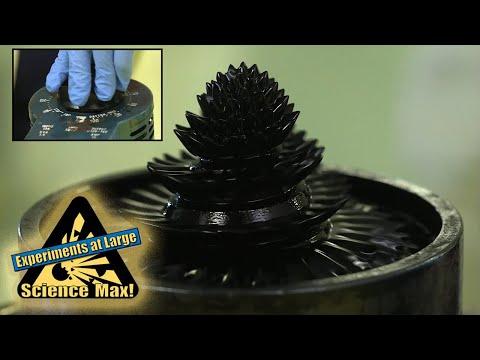
Science Max | MAGNETS | Experiments

🚀NEW VIDEOS EVERY THURSDAY! 🚀 Have you ever done a science experiment and wondered “What would this be like if it were HUGE?” Welcome to Science Max, the exciting new series that turbocharges all the science experiments you’ve done at home.

Channel

Science Max - Scholastic

Lifetime views

4.5M

#72Science & Technology

PLANETEN - Die Suche nach einer neuen Welt | SPACETIME Doku

Alle Augen auf Kepler 452b: Erst 2015 wurde dieser vielversprechende Exoplanet von NASA-Teleskopen aufgespürt. Auf ihm herrschen erdähnliche Temperaturen; sogar Wasser in flüssiger Form soll es hier geben. Mittlerweile vermuten Astrophysiker um jeden Stern unserer Galaxie ein Planetensystem und entdecken immer mehr erdähnliche Himmelskörper. Diplom-Physiker Prof. Dr. Ulrich Walter erklärt in dieser Folge von "Spacetime", welche Dynamik die Suche nach extraterrestrischem Leben heute angenommen hat. 🚀 SPACETIME - alle Sendungen - https://www.youtube.com/playlist?list=PLslDofkqdKI_TVtVqgK0v5AbjLdxr6VKS 📺 Unsere Reportagen & Dokumentationen - http://bit.ly/WELTdokus 🔔 Abonniere den WELT YouTube Channel - http://bit.ly/WeltVideoTVabo #Planeten #Kepler #Spacetime

Channel

WELT Nachrichtensender

Lifetime views

4.6M

#71Science & Technology

Feste Heimat: Wie lebte es sich auf einer Burg? | Ganze Folge Terra X

Burgen sind das architektonische Erfolgsmodell des Mittelalters. Im 12. und 13. Jahrhundert erlebte Mitteleuropa einen Bauboom, weit über 10.000 Burgen entstanden. Bis heute hat das Zeitalter der Burgen Spuren in unserer Kultur und Sprache hinterlassen. Teil 2 der Doku "Mythos Burg" in der ZDFmediathek: https://www.zdf.de/dokumentation/terra-x/mythos-burg-bollwerk-der-macht-100.html#xtor=CS3-82 Dieses Video ist eine Produktion des ZDF, in Zusammenarbeit mit Gruppe 5 Abonnieren? Einfach hier klicken – https://www.youtube.com/channel/UCA3mpqm67CpJ13YfA8qAnow?sub_confirmation=1 Alle Filme und Infos zu Terra X gibt es hier – https://terra-x.zdf.de/#xtor=CS3-82 Terra X bei Facebook – https://www.facebook.com/ZDFterraX Terra X bei Instagram – https://www.instagram.com/terraX

Channel

Terra X History

Lifetime views

4.6M

Coverage and selection method

100 distinct videos are stored for this selection. Page 3 of 10; ten records per page, ordered from fewest to most recorded views with video ID as a stable tie-breaker.

This page includes upload-year records with lifetime views measured by the YouTube API. The recorded date describes when a total was measured. Historical rows, when present, use an archive year and lack observation dates.

Coverage is limited to stored Canada records and may omit videos or dates. The order describes this dataset, not a complete YouTube chart.

The first record on this page has 4.1M recorded views, compared with 4.6M for the last. The median on this page is 4.4M views. Browse later pages for a broader sample of the archive.

Understand the archive. Build your next idea.

Start with a question, check the evidence and use the tools in context.